

Які найкращі низькочастотні інвертори для енергосистем будівельних майданчиків?
Будівельні майданчики часто працюють до того, як з'являється постійне електропостачання. Під час фундаментних робіт, встановлення сталевих конструкцій, внутрішнього оздоблення, дорожніх робіт та віддалених інфраструктурних проектів підрядникам потрібна система живлення, яка може підтримувати роботу інструментів, освітлення, насосів, зварювального обладнання, офісів на будівельному майданчику, пристроїв моніторингу та заряджання акумуляторів.
Традиційно багато об'єктів покладаються на дизельні генератори для тимчасового живлення. Однак, зі зростанням цін на паливо, обмеженнями щодо шуму, контролем викидів та потребою в стабільнішій вихідній потужності, багато підрядників та покупців обладнання зараз порівнюють системи, що використовують лише генератор, із системами сонячної енергії та накопичення енергії. У цій схемі інвертор стає одним з ключових компонентів.
Для будівельних середовищ, a низькочастотний інвертор часто розглядається, коли на об'єкті є двигуни, насоси, компресори, електроінструменти та інші індуктивні навантаження, що створюють високий пусковий струм.
Глобальний попит на тимчасове електропостачання зростає. Ринок тимчасового електропостачання оцінювався приблизно в 5,58 мільярда доларів США у 2024 році та, за прогнозами, досягне приблизно 9,23 мільярда доларів США до 2030 року, причому будівництво та гірничодобувна промисловість входять до числа основних секторів попиту. Дизельне паливо все ще становить значну частку доходів від тимчасового електропостачання, але гібридні та акумуляторні системи привертають увагу, оскільки підрядники шукають менше палива та більш гнучке електропостачання на об'єктах.
Будівельний майданчик — це не те саме, що резервна система для дому. Споживання енергії змінюється протягом дня, і багато навантажень нестабільні. Невелике офісне навантаження може працювати з потужністю 500 Вт, тоді як водяний насос, різальний верстат або повітряний компресор можуть потребувати потужності, яка в кілька разів перевищує їхню номінальну, під час запуску.
Звичайні навантаження на будівельному майданчику включають:
| Тип навантаження | Типове використання | Поведінка влади |
|---|---|---|
| Світлодіодне освітлення майданчика | Нічна робота, аварійне освітлення | Стабільне навантаження |
| Офісне обладнання на сайті | Комп'ютери, роутери, зарядні пристрої | Низьке та середнє навантаження |
| Водяний насос | Зневоднення, очищення, бетонні роботи | Високий пусковий струм |
| Електричний дриль / ріжучий інструмент | Щоденні монтажні роботи | Часті коливання навантаження |
| Повітряний компресор | Пневматичні інструменти | Сильний стрибок попиту |
| Зварювальне обладнання | Сталеві роботи, ремонт | Висока пікова потужність |
| Спостереження / моніторинг | Безпека, системи безпеки | Постійне низьке навантаження |
Ось чому вибір інвертора не повинен ґрунтуватися лише на номінальній потужності. Покупець також повинен перевірити стійкість до перенапруги, конструкцію трансформатора, сумісність з акумулятором, захист навколишнього середовища та післяпродажне обслуговування.
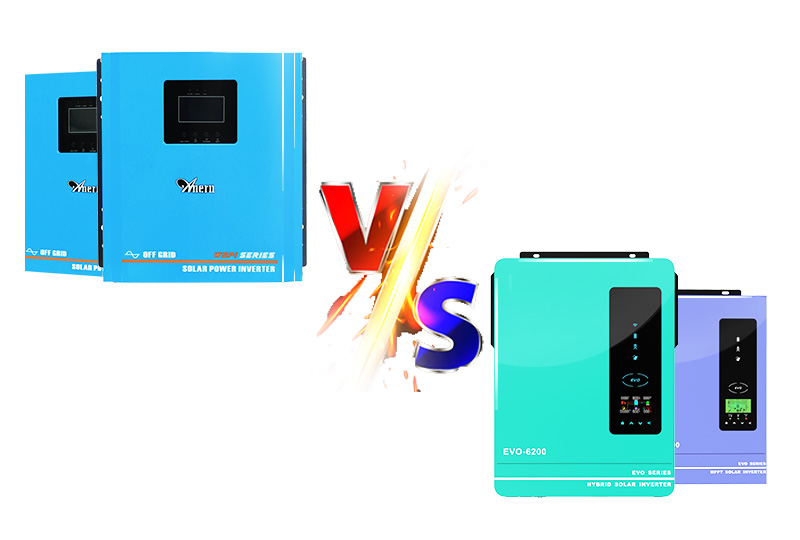
Високочастотні інвертори зазвичай легші, компактніші та підходять для багатьох житлових або невеликих комерційних резервних систем. Однак навантаження на робочому місці часто важче та менш передбачуване.
Низькочастотні моделі зазвичай використовуються там, де система повинна обробляти запуск двигуна, умови перевантаження та тривалий робочий час. У багатьох технічних порівняннях зазначається, що низькочастотні конструкції зазвичай забезпечують кращу стійкість до перенапруги, ніж високочастотні конструкції, що важливо для двигунів, насосів, компресорів та навантажень, пов'язаних зі зварюванням.
| Точка порівняння | Низькочастотний інвертор | Високочастотний інвертор |
|---|---|---|
| Трансформатор | Більший трансформатор | Конструкція трансформатора меншого розміру |
| Вага | Важчий | Запальничка |
| Обробка перенапруг | Краще підходить для важких стартових навантажень | Більше підходить для стабільних легких навантажень |
| Типове використання | Будівництво, майстерні, автономні системи | Резервне живлення житлових приміщень, малі сонячні системи |
| Рівень вартості | Зазвичай вище | Зазвичай нижчий |
| Фокус на технічному обслуговуванні | Охолодження, проводка, узгодження батарей | Узгодження навантаження, налаштування захисту |
Для покупців B2B головне питання не «хто дешевший», а «хто може надійно працювати за реального профілю навантаження сайту».
Будівельному обладнанню під час запуску може знадобитися потужність, що в 2–3 рази перевищує його номінальну. Наприклад, насосу потужністю 1,5 кВт може знадобитися 3 кВт або більше на короткий момент під час запуску. Якщо інвертор не зможе впоратися з цим стрибком, система може вимкнутися, перезапуститися або скоротити термін служби обладнання.
Вибираючи інвертор, перевірте:
Для будівельних проектів зазвичай безпечніше розраховувати на основі пікового попиту, а не лише середнього.
На будівельному майданчику одночасно можуть працювати освітлення, насоси, маршрутизатори, зарядні пристрої, камери та інструменти. Деякі навантаження чутливі до нестабільної напруги, тоді як інші створюють різкі зміни струму.
Гарний інвертор повинен забезпечувати:
Це особливо важливо для офісів на об'єкті, систем моніторингу та комунікаційного обладнання.
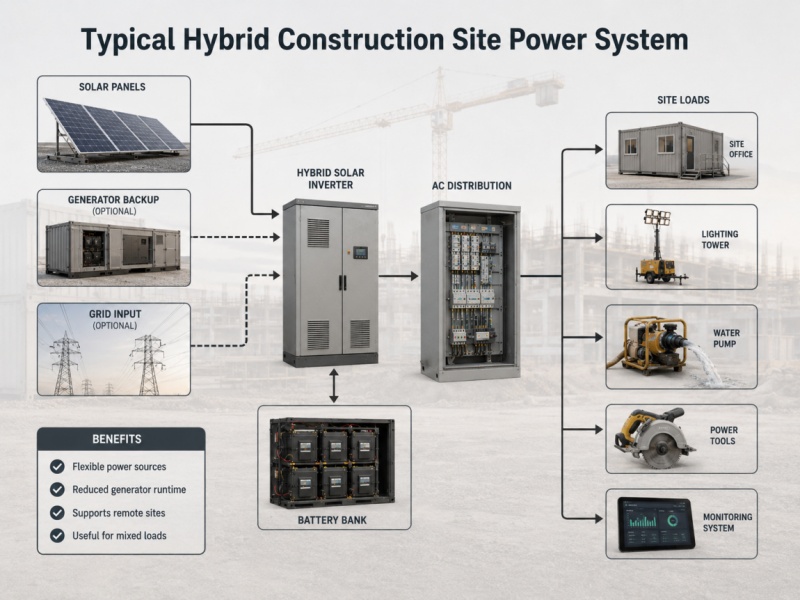
Багато підрядників зараз використовують гібридний сонячний інвертор поєднувати сонячні панелі, акумуляторне накопичення, живлення від мережі та живлення від генератора. Це дозволяє системі заряджатися від сонячної енергії вдень та використовувати накопичену енергію вночі або в періоди низького навантаження.
Гібридна установка може бути корисною для:
Практична конфігурація може включати сонячні панелі, інвертор, акумуляторне накопичувач, розподільче обладнання змінного струму та додатковий резервний генератор.
Нижче наведено простий приклад системи живлення для малого або середнього робочого майданчика.
| Обладнання | Кількість | Номінальна потужність | Розрахункове робоче навантаження |
|---|---|---|---|
| Світлодіодні ліхтарі для майданчика | 10 | 100 Вт | 1000 Вт |
| Офісні пристрої на сайті | 1 комплект | 800 Вт | 800 Вт |
| Водяний насос | 1 | 1500 Вт | 1500 Вт |
| Ріжучі інструменти | 2 | 1000 Вт | 2000 Вт |
| Зарядні пристрої для акумуляторів | 4 | 150 Вт | 600 Вт |
| Система моніторингу | 1 | 200 Вт | 200 Вт |
| Загальне робоче навантаження | 6100 Вт |
Однак робочого навантаження недостатньо для вибору розміру інвертора. Якщо насос або ріжучі інструменти запускаються одночасно, пікове навантаження може короткочасно перевищити 9–12 кВт.
Поширений підхід до визначення розміру:
| Елемент | Розрахунок |
|---|---|
| Розрахункове робоче навантаження | 6,1 кВт |
| Рекомендований запас міцності | 25–40% |
| Рекомендований рейтинг інвертора | 8–10 кВт |
| Необхідна потужність при перенапрузі | Залежить від пускового навантаження двигуна |
| Ємність акумулятора | На основі годин резервного копіювання |
Для цього типу системи блок потужністю 6,2 кВт може підійти для менших денних навантажень, тоді як система потужністю 10,2 кВт може бути більш доцільною, коли насоси, ріжучі інструменти та навантаження на будівельному майданчику працюють разом.
| Зона споживання енергії | Орієнтовна частка |
|---|---|
| Освітлення | 16% |
| Інструменти та ріжуче обладнання | 33% |
| Накачування | 25% |
| Офіс та комунікації | 13% |
| Заряджання та моніторинг | 13% |
Такий тип профілю навантаження допомагає командам закупівель порівнювати потужність інвертора, ємність акумулятора та розмір кабелю перед розміщенням замовлення.
Інвертор контролює вихід змінного струму, але акумулятор визначає, як довго об'єкт може працювати без сонячної енергії, мережі або генератора.
Підходящий інверторний акумулятор Систему слід вибирати на основі:
Приклад розрахунку:
| Вимога | Значення |
|---|---|
| Середнє нічне навантаження | 2 кВт |
| Необхідний час резервного копіювання | 6 годин |
| Необхідна енергія | 12 кВт·год |
| Рекомендована корисна ємність акумулятора | 12–15 кВт·год |
| Рекомендована перевірка системи | Напруга акумулятора та струм зарядки інвертора |
Якщо на об'єкті вночі використовуються насоси або електроінструменти, ємність акумулятора слід збільшити. Для тривалої роботи системі може знадобитися сонячна енергія вдень та резервне живлення від генератора під час тривалих хмарних періодів.
Тимчасове електропостачання є зоною високого ризику на будівельних майданчиках. Організації з електробезпеки та рекомендації OSHA наголошують на належному підключенні проводки, заземленні, захисних пристроях та безпечних методах підключення генератора. Тимчасове електропостачання та розподіл електроенергії повинні виконувати кваліфіковані фахівці, особливо коли система підключається до будівельних панелей, контейнерів або тимчасових офісів.
Важливі моменти безпеки включають:
Для проектів B2B перед оптовими закупівлями слід запросити документацію з безпеки, схеми підключення та інструкції з встановлення.
Перш ніж вибрати низькочастотний інвертор для використання на будівельному майданчику, порівняйте наступні характеристики:
| Специфікація | Чому це важливо |
|---|---|
| Номінальна вихідна потужність | Визначає постійну вантажопідйомність |
| Пікова потужність | Захищає від запуску двигуна та короткочасних перевантажень |
| Вихідна напруга змінного струму | Повинно відповідати обладнанню ділянки |
| Напруга акумулятора | Впливає на розмір кабелю та ефективність системи |
| Зарядний струм | Впливає на швидкість заряджання акумулятора |
| Діапазон вхідної напруги сонячної батареї | Визначає конструкцію фотоелектричного ланцюга |
| Час пересадки | Важливо для чутливих пристроїв |
| Функції захисту | Зменшує час простою та ризик, пов'язаний з обладнанням |
| Спосіб охолодження | Важливо для гарячих та запилених місць |
| Інтерфейс зв'язку | Корисно для моніторингу та обслуговування |
| Гарантійний термін | Важливо для планування проектів та дистриб'юторів |
Для оптових покупців також корисно перевірити упаковку, наявність запасних частин, технічну документацію та чи може постачальник підтримувати вимоги до напруги виробника оригінального обладнання (OEM) або індивідуальні вимоги до неї.
| Тип сайту | Звичайні навантаження | Рекомендований діапазон інвертора |
|---|---|---|
| Невеликий ремонтний майданчик | Ліхтарі, зарядні пристрої, дрібні інструменти | 2–4,2 кВт |
| Тимчасовий офіс на місці | Офісне обладнання, освітлення, камери | 4,2–6,2 кВт |
| Невеликий будівельний майданчик | Насоси, інструменти, офісне навантаження | 6,2–10,2 кВт |
| Віддалений об'єкт інфраструктури | Двигуни, освітлення, зв'язок, резервне навантаження | 10,2 кВт або більше |
| Багатозонний проект | Кілька зон розподілу електроенергії | Кілька інверторних систем або більша конструкція системи |
Для імпортерів, EPC-компаній, дистриб'юторів та підрядників проектів часто краще підготувати кілька варіантів потужності, а не лише одну модель. Це полегшує узгодження проектів різних розмірів та рівнів бюджету.
Перш ніж запитувати цінову пропозицію, підготуйте наступну інформацію:
Чітка таблиця навантажень допомагає постачальникам запропонувати точніше рішення та зменшує ризик недостатнього розміру.
Найкращий низькочастотний інвертор для будівельного майданчика не завжди є моделлю з найвищою потужністю. Він повинен відповідати фактичному навантаженню на будівельному майданчику, струму запуску, часу резервного живлення, системі акумуляторів та умовам встановлення.
Для легких інструментів та офісів на будівельному майданчику може бути достатньо системи потужністю 4,2 кВт або 6,2 кВт. Для насосів, компресорів, ріжучих інструментів та змішаних навантажень змінного струму зазвичай більше підходить більша низькочастотна модель з більшою потужністю перенапруги. Для автономних або паливозберігаючих проектів гібридна система сонячної енергії та акумуляторів може скоротити години роботи генератора та покращити енергетичну гнучкість.
Для покупців B2B правильний вибір інвертора може скоротити час простою, спростити тимчасове планування живлення та забезпечити безпечнішу роботу об'єкта. Перед покупкою завжди перевіряйте профіль навантаження, ємність акумулятора, функції захисту та можливості технічної підтримки.

Електронна пошта : g-ad@anern.com
Додати :5th Floor, Building B, No.2817 Kaichuang Avenue, Science Zone, Huangpu District, Guangzhou, China


Anern Industry Group Limited Всі права захищено
.Xml | Політика конфіденційності  ПІДТРИМУЄТЬСЯ МЕРЕЖЕЮ
 Мова
Мова


